


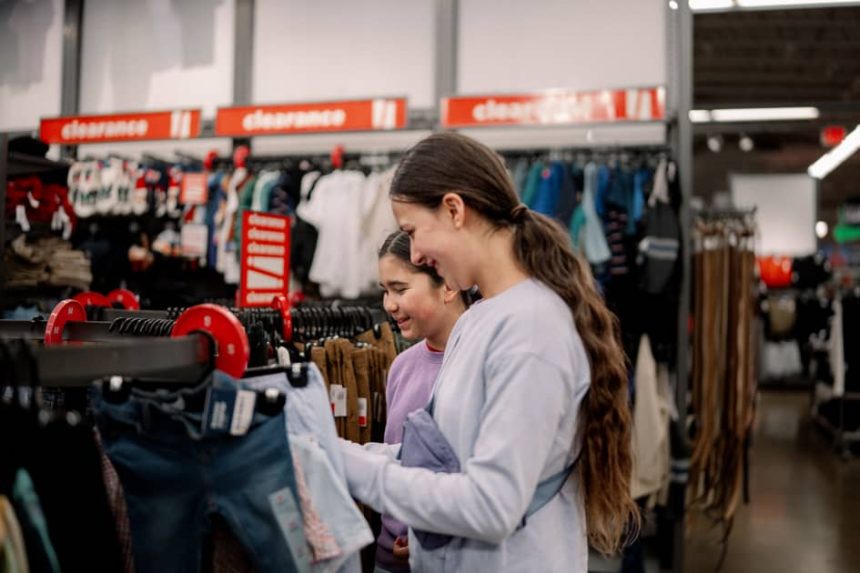
For years, malls have been on the verge of death. Could online fatigue change that?
Older generations grew up watching many facets of life shift from IRL to online, including shopping. But as younger generations search for places outside of home and school to hang out and watch as creators encourage them to visit stores in person, it’s possible that a reversal could be taking place. A survey from retail consultancy MG2 Advisory recently found that 73% of Gen Alpha prefers good ol’ fashioned brick-and-mortar shopping to buying online.
“Teenage life now looks a lot different than it did for previous generations,” Beni Brown, global director of strategy at creator agency Buttermilk, told Marketing Brew, adding that “it’s really interesting to see how they maximize their time in these third spaces because they don’t have a lot of other places to congregate safely amongst themselves.”
While the “Sephora tween” phenomenon in 2024 sparked some concerns around the potential challenges that come with teenagers loitering in retail spaces, Brown noted that many brands (including Sephora) have since come around on the subject.
“Brands are starting to really understand that to future-proof their business, they have to speak to these audiences younger and younger because they set their affinities way younger than we did in previous generations,” Brown said.
As a result, many retailers are investing in in-store experiences and creator strategies to draw young shoppers in and offer them the chance to stay a while.
Stay a while
To increase dwell times, Brown said some retailers are offering everything from in-store coffee shops and DJ sets to interactive activations like product trials and pop-up events.
“Retail has really been transforming itself into more of a showroom experience,” she said, citing Aritzia and Lush as two examples. “A lot of brands are making it feel more like a destination space, rather than just the space [for] a transaction.”
Hollister, which has a primarily Gen Z and Gen Alpha customer base, has in recent years hosted concerts in its stores, Joanna Ewing, SVP of creative marketing, told us. A key component of each Hollister campaign is figuring out how to bring it to life in store settings, she said, and in its most recent campaign with singer Gigi Perez, the brand played a music video produced for the campaign in select stores alongside photo booths where customers could create keychains and other memorabilia tied to the campaign.
“We are an unapologetic mall brand in the best way possible,” Ewing said. “We know how valuable the tangible is to our customer, be that going to the mall with people and connecting, or [forming] these memories that we touch on throughout the aesthetic of the campaign.”
To further increase dwell time, Ewing said Hollister has put a lot of thought into the in-store details, providing comfortable seating and lighting in addition to offering perks like places to hang bags and charge phones.
Get marketing news you’ll actually want to read
Marketing Brew informs marketing pros of the latest on brand strategy, social media, and ad tech via our weekday newsletter, virtual events, marketing conferences, and digital guides.
“The third space is all about the details, and we see that being a huge part of the journey,” she said.
It all starts online
Across the US, malls are transforming to add services and experiences, ranging from gyms to bowling, in an effort to encourage visitors of all ages. Having options beyond shopping is part of the appeal for younger visitors especially, Brown said, citing recent statistics that show that the youth are also driving movie theater attendance.
“It isn’t being driven solely to stores to see the new Rhode [product],” she said. “The mall experience is part of a wider piece.”
In general, Brown said that much of Gen Alpha’s desire for IRL experiences is informed by what they see online, including creator content, making it important for marketers not to separate their retail strategy from their social strategy.
“People pull apart IRL and URL too far,” Brown said. “It’s about finding the inspiration, the spark online, but [customers] want to know the product that they’re buying, feel it, taste it, touch it, get to grips of it.”
Ewing acknowledged that “the mall today is not the Mall of 20 years ago at all,” and said that’s “something that [Hollister gives] a lot of thought to throughout all of [its] platforms, but especially social media.”
Brown said she’s increasingly seen sales associates and creators making content in retail spaces to encourage people to visit—organic content that some brands, like Staples, have found success with. Aerie CMO Stacey McCormick told us that she views the brand’s 500+ stores as hubs where creator partners can film and work with associates to build stronger ties with the brand.
“Our digital business is strong, but our store business is really strong because we know that the connection is made at that store level,” she added.
Seeing creators in stores via posts and vlogs can motivate Gen Alpha to visit stores, Brown said, especially when there’s a sense that they can only get the full experience in person.
“There is this exclusivity-driver that is happening that is making people go to stores,” she said. “Creators are making content that is like, ‘I know [a product] is sold out here, but I found it in this store’…and it becomes a bit of a fun, engaging treasure hunt for [viewers].”
Unlike older generations, Brown said Gen Alpha isn’t always looking for speed or ease of purchase when shopping. Instead, it’s more about the journey.
“Gen Alpha doesn’t operate on convenience,” she said. “They operate on, ‘Does this give me a sense of social community and currency?’”
Read the full article here