


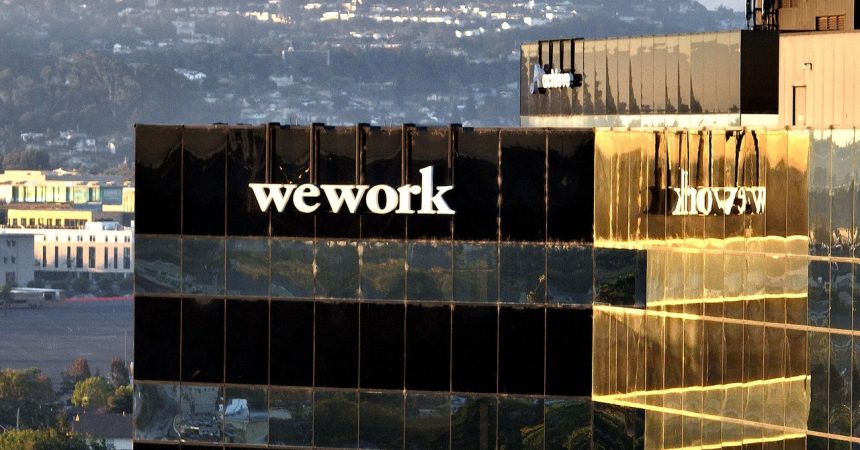
WeWork is set to become a smaller—and potentially rightsized—company. Following a final hearing on its bankruptcy plan Thursday morning, the coworking pioneer will have fewer locations, a new influx of capital, and $4 billion in debt wiped from its books.
In a packed courtroom in Newark, New Jersey, Judge John Sherwood approved WeWork’s restructuring plan. WeWork expects to finally exit bankruptcy in mid-June. The plan also staved off a bid by WeWork’s controversial founder Adam Neumann, who had sought to buy back the company he’d founded before he was infamously ousted.
WeWork’s clean slate will coincide with a new era of working, one in which office workers have pushed back against returning to offices full-time; as of late 2023, nearly 20 percent of office space in the US sat vacant. Yet workers are also experiencing more loneliness, a problem that coworking companies argue they can address by bringing people together. WeWork’s reboot is a test of the future of coworking itself.
“WeWork still believes that this is a viable business model,” says Sarah Foss, global head of legal and restructuring at Debtwire, a financial services company. “They’re exiting a much leaner company.”
WeWork filed for bankruptcy in November. Hammered by high interest rates and the Covid-19 pandemic, which started a work-from-home phenomenon, it was left with too many leases and too many hot desks and flexible office spaces it couldn’t fill. In 2023, lease costs made up two-thirds of its operating expenses.
WeWork had more than 500 global locations before it filed for bankruptcy, and will operate about 330 WeWorks going forward, about half of which will be in the US and Canada. That will save WeWork about $12 billion in rent obligations, cutting its rent costs in half, according to the company’s estimates. WeWork’s plan comes from amending or assuming many leases, and rejecting or negotiating to exit some 150 others. It prioritized reducing its footprint in areas where it had oversupply, either from occupying too many floors in the same building or having multiple locations in close proximity.
Many of these changes come as part of its Chapter 11 bankruptcy filings, but locations outside of the US and Canada are not part of that bundle. In other countries, WeWork has worked with landlords to renegotiate some of its leases, including those in Singapore, Kuala Lumpur, Bangkok, Ho Chi Minh City, Jakarta, Manila, and Paris.
WeWork went to hundreds of landlords during the process to negotiate new lease terms or exits from buildings. Bankruptcy allows companies to renegotiate and reject leases outright, but the market conditions that now plague office landlords primed WeWork with advantages to negotiate better terms to stay in place. “They have all the leverage, knowing that we’re in a terrible time for landlords,” says Eric Haber, counsel at Wharton Property Advisors, a New York City office-leasing advisory firm. Now, a slimmer WeWork has a “streamlined configuration where they hope they can make money, but they have very optimistic projections,” Haber says. “Even with this much better setup, they still have to execute.”
Read the full article here