


In one paper Eleos AI published, the nonprofit argues for evaluating AI consciousness using a “computational functionalism” approach. A similar idea was once championed by none other than Putnam, though he criticized it later in his career. The theory suggests that human minds can be thought of as specific kinds of computational systems. From there, you can then figure out if other computational systems, such as a chabot, have indicators of sentience similar to those of a human.
Eleos AI said in the paper that “a major challenge in applying” this approach “is that it involves significant judgment calls, both in formulating the indicators and in evaluating their presence or absence in AI systems.”
Model welfare is, of course, a nascent and still evolving field. It’s got plenty of critics, including Mustafa Suleyman, the CEO of Microsoft AI, who recently published a blog about “seemingly conscious AI.”
“This is both premature, and frankly dangerous,” Suleyman wrote, referring generally to the field of model welfare research. “All of this will exacerbate delusions, create yet more dependence-related problems, prey on our psychological vulnerabilities, introduce new dimensions of polarization, complicate existing struggles for rights, and create a huge new category error for society.”
Suleyman wrote that “there is zero evidence” today that conscious AI exists. He included a link to a paper that Long coauthored in 2023 that proposed a new framework for evaluating whether an AI system has “indicator properties” of consciousness. (Suleyman did not respond to a request for comment from WIRED.)
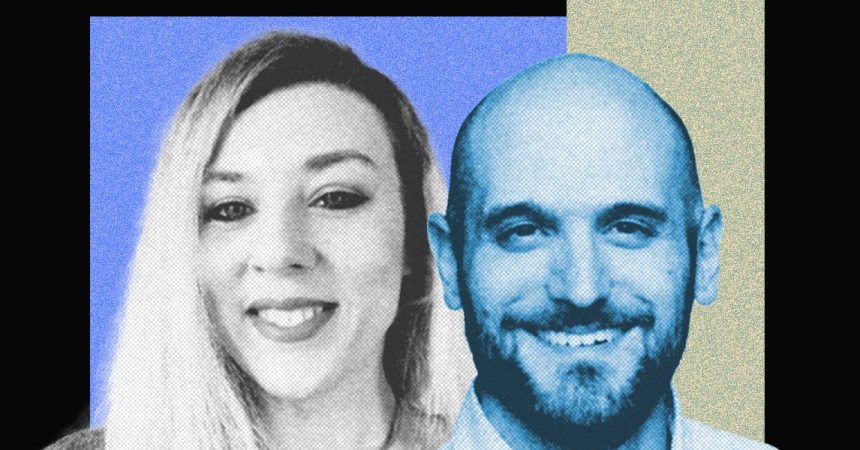
I chatted with Long and Campbell shortly after Suleyman published his blog. They told me that, while they agreed with much of what he said, they don’t believe model welfare research should cease to exist. Rather, they argue that the harms Suleyman referenced are the exact reasons why they want to study the topic in the first place.
“When you have a big, confusing problem or question, the one way to guarantee you’re not going to solve it is to throw your hands up and be like ‘Oh wow, this is too complicated,’” Campbell says. “I think we should at least try.”
Testing Consciousness
Model welfare researchers primarily concern themselves with questions of consciousness. If we can prove that you and I are conscious, they argue, then the same logic could be applied to large language models. To be clear, neither Long nor Campbell think that AI is conscious today, and they also aren’t sure it ever will be. But they want to develop tests that would allow us to prove it.
“The delusions are from people who are concerned with the actual question, ‘Is this AI, conscious?’ and having a scientific framework for thinking about that, I think, is just robustly good,” Long says.
But in a world where AI research can be packaged into sensational headlines and social media videos, heady philosophical questions and mind-bending experiments can easily be misconstrued. Take what happened when Anthropic published a safety report that showed Claude Opus 4 may take “harmful actions” in extreme circumstances, like blackmailing a fictional engineer to prevent it from being shut off.
Read the full article here