


Chances are you’ve heard of juggernaut beauty brands like Fenty Beauty and Rare Beauty, which are affiliated with superstars Rihanna and Selena Gomez, respectively.
But you’d be forgiven if you haven’t heard of others, like actor Naomi Watts-founded menopause wellness brand Stripes Beauty, which filed for bankruptcy a year after debuting. (It has since been acquired by L Catterton, a private-equity firm co-founded by LVMH.)
The number of beauty brands with celebrity founders has exploded in recent years. In 2023, celebrity beauty brands brought in more than $1 billion in sales, marking the first time ever that milestone was reached, according to market research firm Nielsen IQ, which tracks 43 such brands. But having a celebrity founder isn’t always a recipe for success.
“There’s no debate in celebrities’ ability to move consumer behavior,” Ivan Kayser, CEO of Stagwell brand consultancy Redscout, told Marketing Brew. “But it’s not as simple as, ‘stick your face on a thing, call yourself the founder.’”
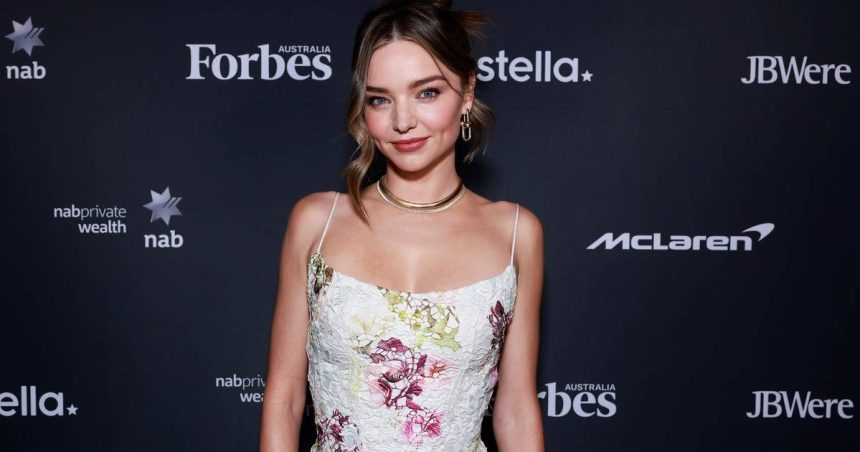
Some brands, like supermodel Miranda Kerr’s 15-year-old brand Kora Organics, have sought to deemphasize the celebrity status of their founders and focus on other ways to build their brands.
“The celebrities have come in and out, but we don’t associate ourselves with the celebrity brand,” Lauren Elias, the brand’s GM and CMO, told Marketing Brew. “We’ve really kind of just stayed true to our roots for the past 15 years.”
Long game
Kora Organics officially debuted in 2009 in Australia, in 2017 in the US, and globally shortly after. The brand’s products have been featured in outlets like Vogue and Allure, and have been used by other celebrities like singer Katy Perry, Elias said. Since expanding internationally, Kora has grown its presence to over 40 countries, according to Harper’s Bazaar Australia; while the brand declined to share specific sales figures, Elias said that the company has had “year over year double-digit growth.”
As Kora has grown, the brand has “worked really hard to reposition her as a founder and move her away from the people that associate her with Victoria’s Secret Angel,” Elias said.
Elias credits the brand’s longevity to its evolving marketing and branding strategy, which has in recent years included leaning into organic partnerships rather than relying on paid marketing alone.
“We’ve really focused on brand awareness and creating buzz and excitement about this brand,” she said. “We’ve definitely evolved our marketing model more away from just the pay-to-play levers of paid media, paid sampling, paid events, to more of these organic partnerships.”
Get marketing news you’ll actually want to read
Marketing Brew informs marketing pros of the latest on brand strategy, social media, and ad tech via our weekday newsletter, virtual events, marketing conferences, and digital guides.
Elias said that the brand tries to avoid “one-dimensional marketing programs,” and has looked to promote new products through partnerships with brands with similar values. For a cleansing balm released last month, Kora teamed up with Hatch, a company that sells devices to aid with sleeping, to help promote the product.
The cleansing balm is “very much about unwinding and relaxing…partnering with Hatch just seemed like the perfect synergy,” she said. “We love these partnerships because not only do they help in terms of our own brand awareness—because we get to piggyback off of another brand’s consumer base—but it also helps the consumer, because it gives them a chance to discover a whole new brand that they probably never heard of.”
Do the math
The celebrity beauty brands that are thriving are really thriving. In September, Gomez made her debut on the Bloomberg Billionaires Index, with “the vast bulk of that wealth…tied to Rare Beauty,” according to Bloomberg. Rihanna became a billionaire in 2021, according to Forbes, which noted at the time that “the bulk of her fortune…comes from the value of Fenty Beauty.”
Of the 10 most successful celebrity-owned businesses, six the majority of them are beauty or skin-care brands, according to a recent report from the packaging company Arka. Rare Beauty came in third on Arka’s list, just ahead of Fenty. (Kora was not on the list.)
Thanks to their attachment to famous people, celebrity beauty brands can provide a convenience element to their branding, Kayser said. In other words, there’s often no need to build a story around a founder who the public already knows.
But like Kora, which has tied its brand to wellness efforts and organic farming, other celebrity brands have looked to link their branding with causes beyond their famous founders. Rare Beauty, for instance, has sought to highlight the importance of mental health, something Gomez herself has championed, through everything from partnerships and activations to its charity, the Rare Impact Fund.
With that said, though, there can be benefits to tapping into the power of celebrity, Elias said, noting that Kerr has appeared on health and wellness-focused podcasts to “speak about her story.”
“We see a huge return on investment when Miranda’s on [those] podcasts,” she told us.
Read the full article here