


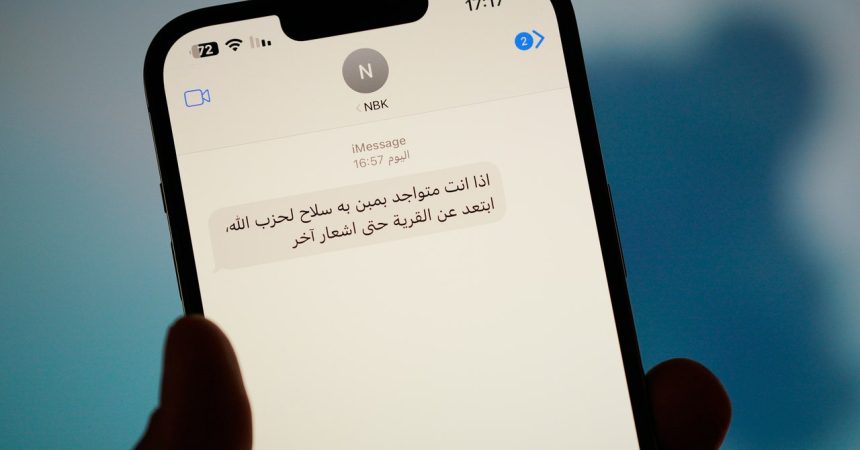
At the start of September, Nour was having an ordinary evening at home in Beirut—eating pumpkin seeds and watching Netflix—when the SMS hit her device like the smartphone version of a brick through her window. The sender name appeared as eight question marks, “????? ???”, and in the message preview she could read, in clunky, hard-to-understand Arabic, a threat: “We have enough bullets for everyone who needs them.”
To Nour, whose name has been changed to protect her anonymity, it was obvious who had sent this message. “Israel,” she says, “that’s their tone.” The Israeli military did not reply to WIRED’s question about whether they were the source of the message. But the text appeared at a time when Lebanon was on edge, days after Israel and the Lebanese-based group Hezbollah had exchanged air strikes and rockets. It’s unclear how many other people received the SMS threat, although Nour says she saw screenshots on social media of the same message. She was worried the text might contain a malicious link. “I didn’t dare open it,” Nour says.
In Lebanon, the idea of receiving a message from Israel is not new. In the early 2000s, people in Lebanon received recorded phone calls, asking for information about missing Israeli airman Ron Arad, whose plane went down during a bombing mission in the ’80s and is now presumed dead. The last time Nour received a message from a sender she believed to be Israel, it was 2006 and she was a teenager living in the southern suburbs of Beirut. She remembers picking up the landline to hear a robotic voice announce a message that started with the words: “Dear Lebanese people.” That call followed a monthlong war, which killed more than 1,000 people and forced 900,000 to flee their homes.
Violence accompanied last week’s text message too. Israel and Hezbollah have traded fire since the start of the war in Gaza, with a major escalation taking place this week. The latest Israeli airstrikes on Hezbollah targets on Lebanon have been the deadliest in decades, with 558 people killed on Monday alone, according to the country’s health minister.
On Wednesday, Hezbollah launched a rocket at Tel Aviv, which was shot down. There were no reports of casualties. As Lebanese people check on the safety of their family and friends, “most people are now more attached to their phones than usual,” says Mohamad Najem, executive director of the Beirut-based digital rights group SMEX. These messages puncture the feelings of safety people often feel around their phones. “It is definitely creating [a feeling of] insecurity for people and fear.”
Across the border, civilians in Israel have also been receiving threatening texts, with the eerie messages demonstrating the psychological role that personal smartphones are now playing in the conflict, on both sides of the border.
The week after Nour got that text, others in Lebanon reportedly began receiving messages via automated calls on their landlines or via text. “If you are in a building with Hezbollah weapons, stay away from the village until further notice,” the message said, echoing similar calls received in Gaza before an airstrike. Between 8 am and 8:30 am on Monday, 80,000 people across Lebanon received these messages, according to a spokesperson for Lebanese telecoms network Ogero who declined to be named. One of those calls rang through to the office of Lebanon’s minister of communication, Ziad Makary, who attributed the message to psychological warfare by the Israelis.
Read the full article here