


People are afraid AI will replace their jobs. Now, they also have their children’s creative development to worry about.
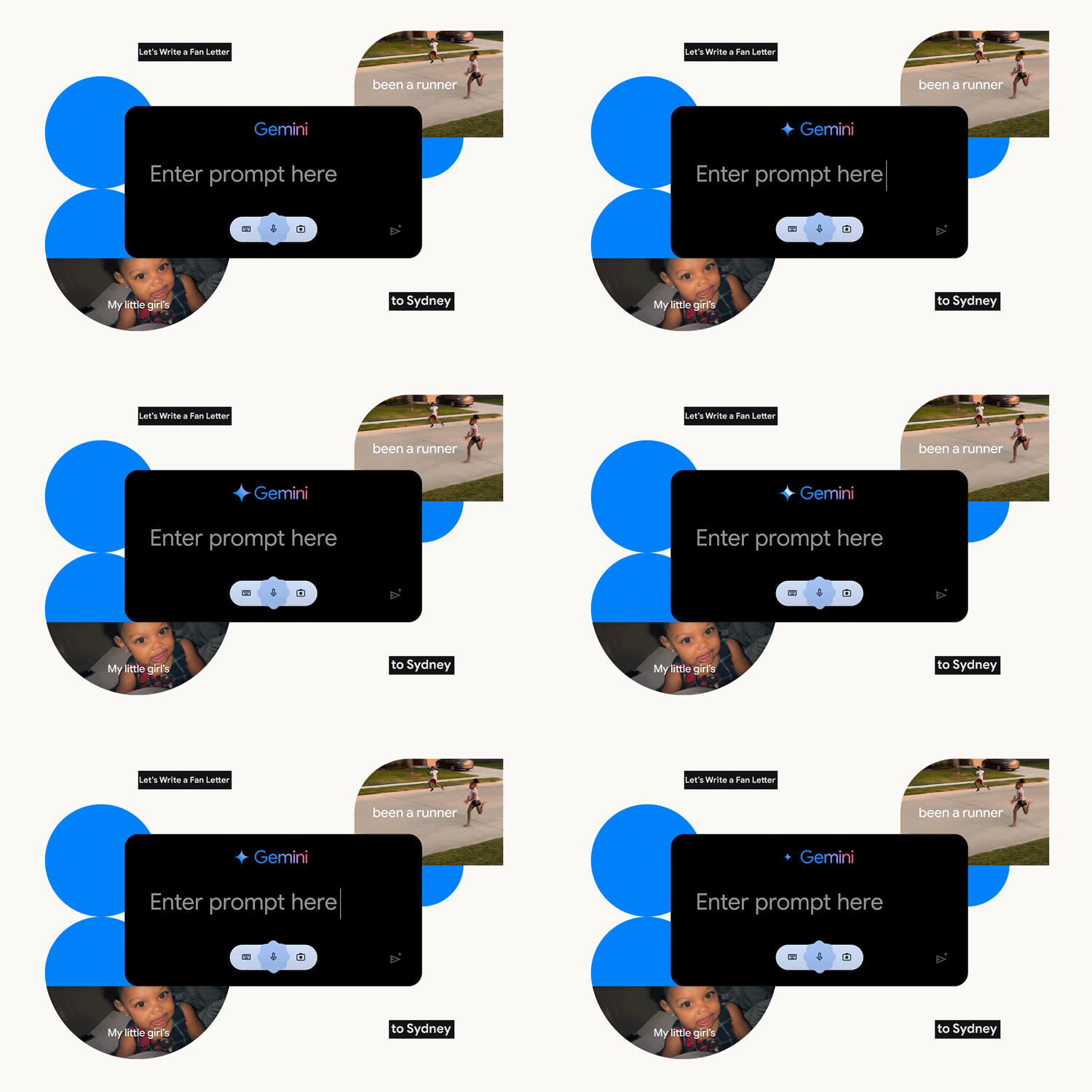
Google’s “Dear Sydney” ad, created for The Olympics, shows a dad asking Gemini AI to write a letter to track star Sydney McLaughlin-Levrone on behalf of his young daughter to let the athlete know “how inspiring she is.”
The ad, which Google created in-house, received swift backlash online, with outlets like Ad Age calling it “tone deaf.” Google has since pulled the ad from the air and turned off comments on the video on YouTube, but not before spending an estimated $2.7 million on TV ads between its debut and August 1, according to iSpot.
“We believe that AI can be a great tool for enhancing human creativity, but can never replace it. Our goal was to create an authentic story celebrating Team USA. It showcases a real-life track enthusiast and her father, and aims to show how the Gemini app can provide a starting point, thought starter, or early draft for someone looking for ideas for their writing,” Google spokesperson Alana Beale said in a statement shared with Marketing Brew. “While the ad tested well before airing, given the feedback, we have decided to phase the ad out of our Olympics rotation.” Prior to it being taken down, Google CMO Lorraine Twohill called the ad a “beautiful example of how technology can bring us closer to turning dreams into reality” on LinkedIn.
We spoke with marketers about where Google went wrong and how companies should be thinking about advertising new technology—specifically AI—moving forward.
“Anti-human” messaging
A father of three and a grandfather of four, marketing consultant Shelly Palmer told Marketing Brew he couldn’t imagine why Google would portray a father as needing generative AI as a “shortcut” to parenting instead of teaching and helping a kid write a letter. In a blog post, he added that “Google should be ashamed” of the message sent.
“And just to fuel the flames—why did Google reinforce the stereotype of a minority parent being undereducated and insecure about their communicative skills?” he wrote.
The ad isn’t anti-creative, but “anti-human,” he told us. (Perhaps worth mentioning, at the bottom of Palmer’s blog is an author’s note that says it was created with the “assistance of various generative AI models.” However, he rarely uses Gemini, he said. “I don’t like it very much.”)
Technically, it’s “beautifully done,” said David Teicher, chief content officer at Brand Innovators.
The issue lies in the underlying implication, he said: What do these tools intend to replace? The spot reminded him of Apple’s “Crush!” advertisement, reviled by the industry, in which a hydraulic press slowly falls on paint cans, a vinyl record player, a piano, and a trumpet, ultimately lifting to reveal a new iPad Pro. Some viewers interpreted the ad as a threat, technology (literally) crushing artistic expression and creativity. Ad Age called it a “rare misstep” for Apple, and the tech company issued an apology.
“We don’t want this technology to replace the things that we love, these creative pursuits,” said Teicher. “Outsourcing that to AI just takes away everything special about it.”
The implication of Google’s ad, Ellie Bamford, chief strategy officer at VML told us, is that AI can replace or impersonate people and it’s out of our control.
Get marketing news you’ll actually want to read
Marketing Brew informs marketing pros of the latest on brand strategy, social media, and ad tech via our weekday newsletter, virtual events, marketing conferences, and digital guides.
“People want to live in a world where they use AI to supercharge, to amplify, to enhance their human skills,” she said. “Not in a world where AI is pretending to be a human.”
That’s especially concerning when it’s made to appear that children’s letters, which are “one of the most innocent expressions of admiration and joy,” could be a thing of the past, she added. A better use case for Google, in Bamford’s opinion, would have been showing how Gemini could assist with mundane tasks or free up time for creative ventures.
The implications of the ad are “entirely unacceptable,” Stephanie Spicer, president of the ad agency Luquire, said to Marketing Brew over email.
“Because it is a cute story, with a cute little girl and a caring father, it is easy to miss the fact that it is essentially telling us that our own words and feelings are less important than having something ‘polished,’” she wrote. “If you take it at face value and don’t think about the moral implications, it is a good ad.”
Generative AI tech is still a relatively new phenomenon: Its use is up 900%, rising from 7.8 million people using generative AI at least once per month in 2022 to 100 million in 2024, according to eMarketer.
“If you’ve never heard of generative AI before and this commercial was your very first introduction, you’re just kind of confused, disappointed, maybe scared, or something just doesn’t feel right,” Michael Miraflor, chief brand officer at the VC firm Hannah Grey, told Marketing Brew.
Recent research in the Journal of Hospitality Marketing & Management suggests that people don’t like it when companies use AI in their marketing or advertising. In an interview with WSU Insider, study author Mesut Cicek said, “When AI is mentioned, it tends to lower emotional trust, which in turn decreases purchase intentions. We found emotional trust plays a critical role in how consumers perceive AI-powered products.”
Amy Chen, director of experience at Siegel+Gale, said the ad made her worried about the future of self-expression and creative development.
“This little kid is at the beginning of the rest of her life, she already has something that she wants to say to this person who means so much to her, but you’re not allowing her to articulate that or even start to try to define what her voice is,” she said.
In her opinion, Google should have shown an experienced adult using Gemini, not a kid who is still in her formative years who should be learning and growing skills like writing—even if that packs less of an emotional punch. Children’s book author Jamilah Thompkins-Bigelow had a similar reaction on X, writing that the ad “hurt [her] heart as someone who has taught writing to many young kids.”
Knowing that people have expressed concerns about AI for a while now, particularly around creative originality and ownership, Chen said Google “[doesn’t] really have an excuse to be this tone deaf.”
The goal of AI, she said, shouldn’t be to “accelerate perfection.”
“There’s so much beauty in imperfection, especially when it comes from a kid,” she said. “The imperfection is a charm.”
Read the full article here