


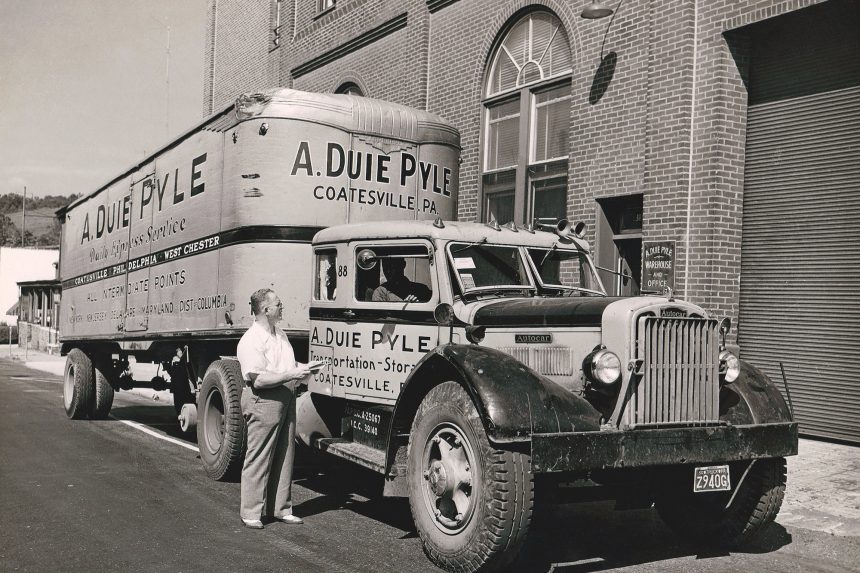
Peter Latta, the 67-year-old CEO and third-generation owner of West Chester, Pennsylvania-based transportation and logistics provider A. Duie Pyle, was just 12 years old when he first tried his hand at the family business.
“That very first day, the shop leader asked me to fuel up the truck that was by two fuel dispensers,” Latta tells Entrepreneur. “I went out and figured out how to fill up the truck, and he ambled over and said, ‘Son, do you know the difference between diesel fuel and gasoline?’ And I said, ‘Uh, no.’ And he said, ‘Well, you just put the wrong fuel in the truck.'”
Despite the rough start, Latta would go on to learn all the ins and outs of his grandfather Alexander Duie Pyle’s now-100-year-old company and help steer it through some significant periods of growth.
Image Credit: Courtesy of A. Duie Pyle. The Lattas; Peter Latta, center.
The story begins with the purchase of a used truck in 1924; Alexander Duie Pyle drove the vehicle, and his wife Mary Ellen, Latta’s grandmother, was the small operation’s bookkeeper and dispatcher. The couple would have one daughter, Latta’s mother Eleanor, who married James (Jim) Latta. When Latta returned from serving in World War II, he joined A. Duie Pyle on what he’d thought would be a temporary basis — but remained until his passing in 1995, Latta says.
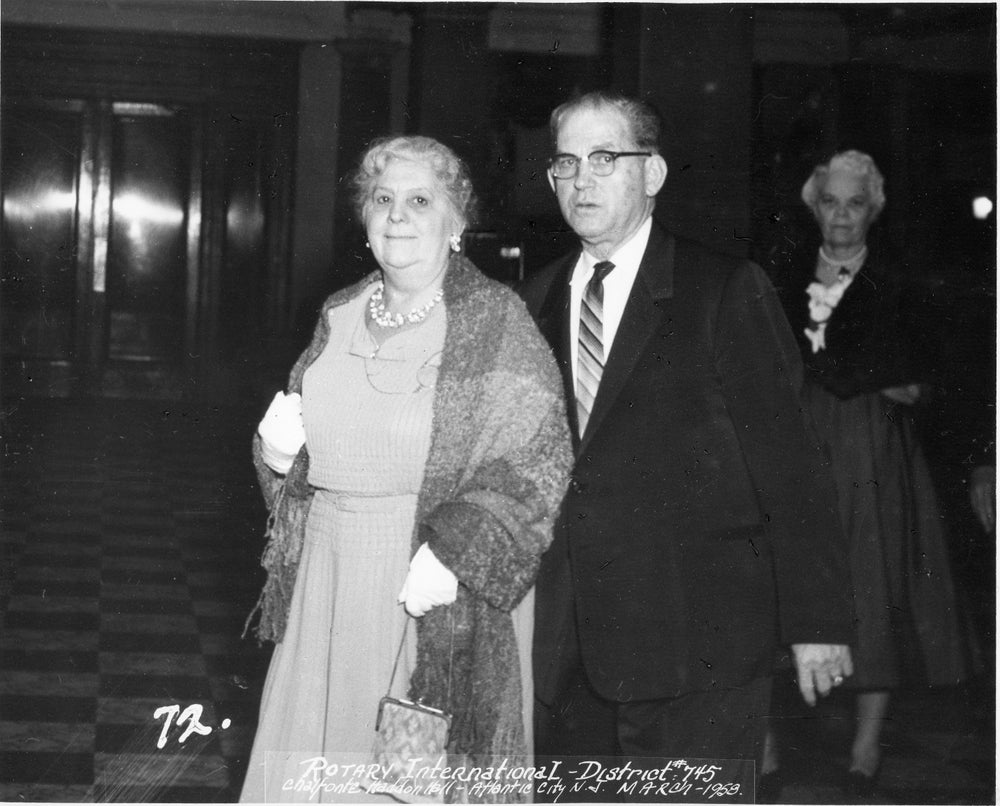 Image Credit: Courtesy of A. Duie Pyle. Mary Ellen and Alexander Duie Pyle.
A decade prior, in 1985, Peter Latta made his own full-time return to A. Duie Pyle after working as a CPA and then as an attorney. The company had fewer than 100 employees at the time and saw about $10 million in annual revenue, he says. Today, Pyle, which serves the Northeast with extended coverage through partnerships in the Southeast, Midwest and Canada, boasts more than 4,300 employees and is on track to see $850 million in revenue this year.
Related: Entrepreneurship Means Generational Independence. These Leaders of a 115-Year-Old Family Business Are Honoring the Past and Building for the Future.
The company’s largest business unit is less-than-truckload transportation, a for-hire shipping service for relatively small loads or quantities of freight. In 2013, Pyle launched its dedicated service business, which customers, including the supermarket chain Wegman’s, contract for full-time work. Pyle also has a warehouse and distribution business, a truckload management service and a legacy steel-hauling business.
“If people trust each other [and] depend on each other, they don’t want to let each other down.”
As impressive as Pyle’s footprint and revenue are now, it had to navigate some major challenges — and take advantage of certain opportunities — to become the success it is today.
In 1979, one year before the deregulation of the motor carrier industry began, Pyle endured a three-month strike when Latta’s father, then the CEO, sought to negotiate the terms of Jimmy Hoffa Sr.’s Teamsters National Motor Freight Agreement. He offered a new termination date and five-cent-an-hour differential, believing that the 30-year union relationship couldn’t be sustained if Pyle had to weather the impending storm.
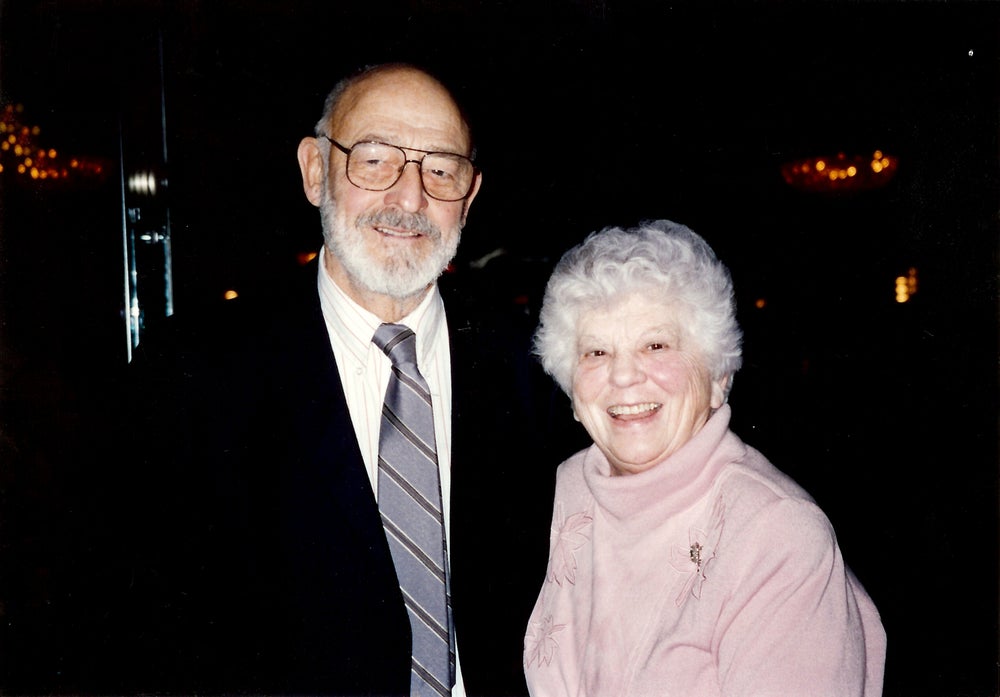 Image Credit: Courtesy of A. Duie Pyle. Jim and Eleanor Latta.
Ultimately, Jim Latta’s leadership would shore up the business: Following the 14-week strike, about 30 of the nearly 100 employees resigned from the union and crossed the picket line. After a decertification election, Pyle became a union-free company. “Trust is a powerful thing,” Latta says. “I learned that in the Teamster strike. If people trust each other [and] depend on each other, they don’t want to let each other down.”
Related: The Biggest Obstacle Facing Leaders Is Distrust. Here’s How to Build Confidence in Your Team.
Then, in 1980, the process of deregulation was underway. The motor carrier industry had not been regulated until 1935 when it became handled “much like a public utility,” Latta says. The Interstate Commerce Commission regulated moves across states, and a state’s public utility commission regulated moves within its borders.
“If you were operating, you received grandfather rights to operate in the territory that you had been operating,” Latta says. “So obviously, that was our situation from 1935 to 1980. It was very difficult to get certificates of operating authority issued by the Interstate Commerce Commission or the state public utility commissions. And so carriers would buy another carrier to get their certificate of operating authority.”
Related: Most Family Businesses Don’t Have a Succession Plan in Place, But That’s a Huge Mistake
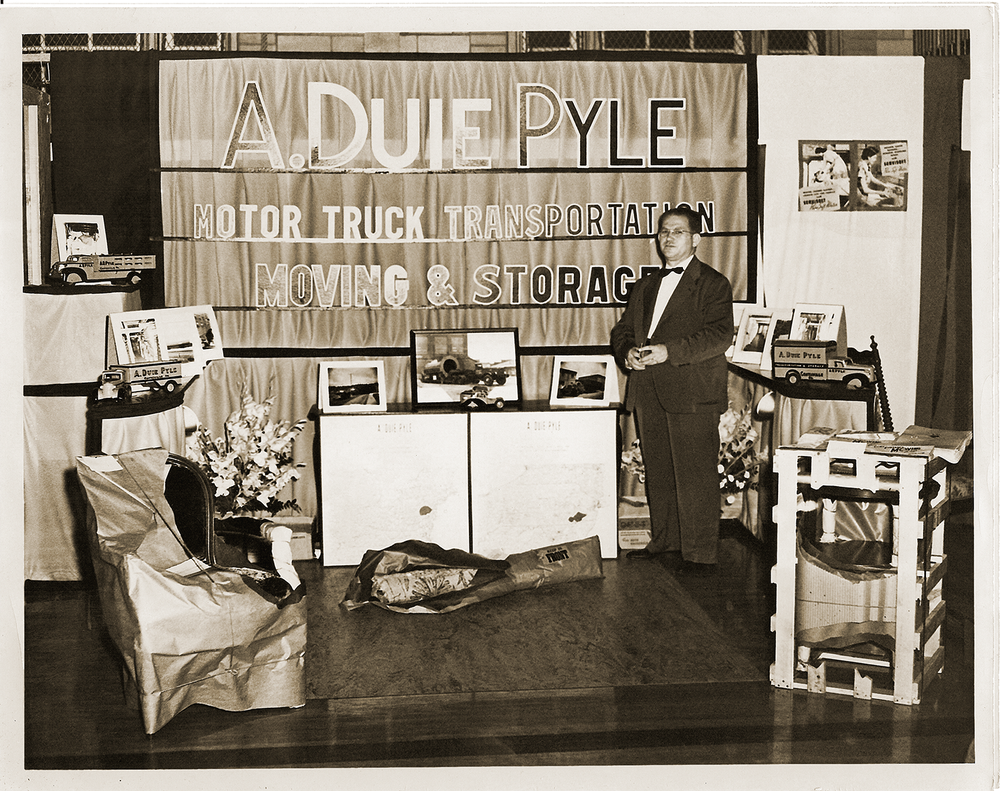 Image Credit: Courtesy of A. Duie Pyle. Alexander Duie Pyle at a trade show in 1939.
Additionally, during that regulation period, carriers collectively set the rates — with antitrust immunity. Known today as price fixing among competitors, it meant limited price competition and a “pretty comfortable world,” Latta says. Then, in 1980, deregulation began, making it easier for carriers to receive new territory operating authority and eliminating the antitrust exemption for collective rate setting — which meant an influx of new carriers and increasing price competition.
“Nobody knew what it was going to entail,” Latta recalls — but it would completely upend the industry. Businesses within the motor carrier industry reported revenue to the government until 1980, and of the top 60 carriers by revenue that year, only three, including Pyle, remain in business today, Latta says, noting that 55 of those 60 were Teamster Union carriers.
Related: How to Gain a Competitive Edge: 4 Key Questions to Ask When Analyzing Your Competitors
“While deregulation became a calamity for many, many carriers, it was an opportunity to expand and grow and benefit.”
Until 1996, Pyle operated one less-than-truckload terminal that served an area about 50 miles around West Chester, Pennsylvania, and the company didn’t serve any state in its entirety. As the industry’s disruption continued and customers requested fuller coverage, Pyle rose to meet the challenge, setting out to become a regional carrier in the Northeast.
“At that time, there were six regional carriers that pretty much owned the market,” Latta says. “We were an ankle-biter as we geographically expanded to that area. Today, all six of those companies are no longer in business, and we survived. So while deregulation became a calamity for many carriers, it was an opportunity to expand, grow and benefit from deregulation and heightened competition.”
According to Latta, Pyle’s key to a successful century in business “has really been the engagement of the Pyle people, which I always attribute to the six core values [empathy, candor, citizenship, service first, integrity and profitability]. As we embrace those, all the people in the Pyle team create a very healthy culture, and from that culture comes trust.”
Related: How Listening Can Help You Build a Culture of Trust in Your Business
“Our secret sauce has been our composite discretionary effort of the Pyle people.”
That sense of trust came to the fore again on June 15, 2019, when Pyle suffered from a cyber ransomware attack and could not access its voicemail, email and self-developed operating applications. The company returned to a pencil-and-paper approach — and was honest with its customers about the predicament. They appreciated the transparency, Latta says, and some even took back business temporarily with the promise to return once the situation was resolved.
“From that linkage between core values, culture and trust comes a term I like to use — ‘discretionary effort,’ which is the over and above effort,” Latta says. “Our secret sauce has been our composite discretionary effort of the Pyle people. At the end of the day, we live in a service world. Trucks, trailers, facilities, technology are all tools of the trade, just like a saw and a hammer are to a carpenter. But it’s the people using the tools and their discretionary effort that determine where we rank relative to competition.”
Related: 12 Ways You Can Immediately Start To Motivate Your Employees
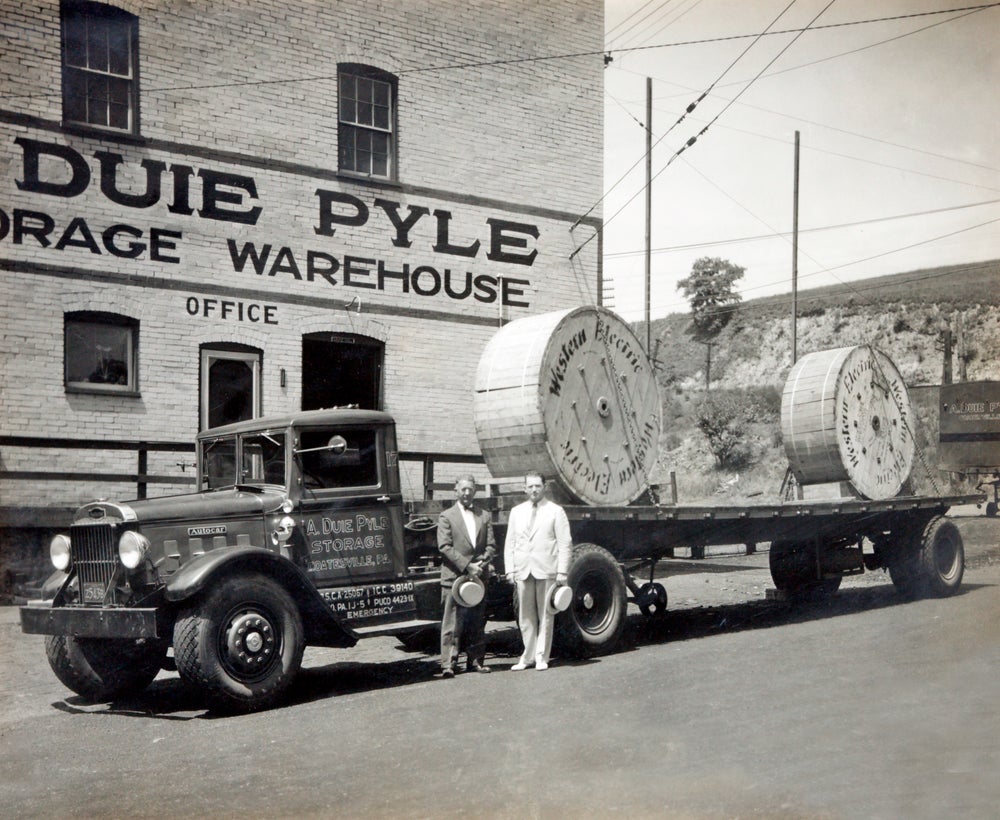 Image Credit: Courtesy of A. Duie Pyle
Latta loves Pyle’s people and culture and says it’s gratifying to know that the company is “making 4,000 families’ lives financially better.” He recalls an interaction about a month ago when he was at the Bronx New York Terminal for an early morning meeting; a driver showed him a picture of the house he and his wife had just bought, one they’d “never dreamed” could be theirs, and said that they’re able to save for their children’s education.
“From a longevity standpoint, [it’s about] earning — I use the term ‘earning,’ not ‘winning’ — earning the trust of our customers, our employees and the families of our employees — because that’s the silent force behind the curtain, the families — and helping motivate our Pyle people to do great things,” Latta says.
Read the full article here